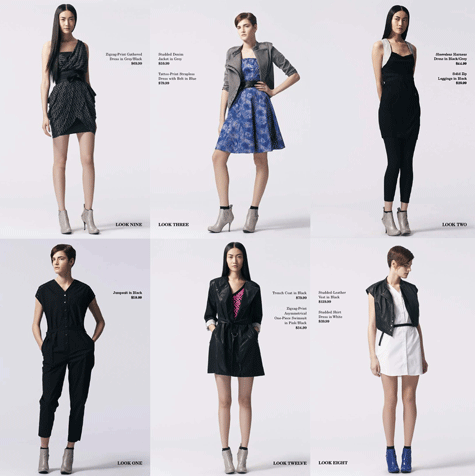
Walking into a store like Forever 21 is exciting
for anyone interested in fashion—the sheer quantity of styles and colors (and
at such cheap prices) is overwhelming. But what does it take to bring so many
clothes to us so cheaply, and what is the true cost of fast fashion?
Simply put, “fast fashion” means that new styles
are constantly being designed, manufactured, and put on the shelves to keep up
with changing trends. While fashion cycles traditionally correspond with the
changing seasons, fast fashion cycles last four to six weeks. This is troubling
on several levels: the financial, the aesthetic, and most of all the ethical.

For example, a blouse that is only going to be in style for
another six weeks is going to be made as such: a second glance reveals loose
buttons and weak seams. It may look great when you buy it, but chances are that
it won’t make it through the season. And when it does inevitably tear, stain,
stretch or shrink, it has to go somewhere. Because it was originally of such
poor quality, it isn’t worth repairing or donating, so just throw it away! Besides,
you can pick up another cute blouse at the mall next weekend. In a recent NPR article, Jim Zarroli states, "it gets recycled into industrial rags and insulation, or even thrown out altogether — generating the term 'landfill fashion'," (Zarroli 24). In other words, fast fashion isn't just a waste of money, it is also bad for the environment.

This attitude that fashion is temporary and instantly gratifying pervades the designs. A quick look at the
Delia’s website reveals that it is going to be another frustrating season for
anyone who isn’t fan of high-low hems or neon skinny jeans. While there is
nothing wrong with quirky, fun pieces, fast fashion is supposed to give
everyone the freedom to express themselves through their clothes. So often it
has the opposite effect: rather than bringing style to the masses, it floods
the market with the homogenous and uncreative knockoffs of the latest trends.
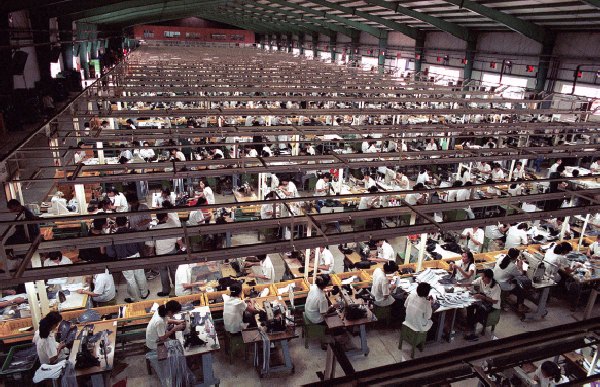
Most importantly, the rush to keep up with new
trends is demanding on factories where the conditions are already bad for
workers. Corners have to be cut somewhere to continue producing cheap clothes—those
corners happen to be workers’ rights. According to Lucy Siegle in The Guardian,
“
A factory that might realistically
be able to supply 20,000 pairs of jeans can suddenly be deluged by an order for
500,000” (Siegle 4). This means that factory workers are forced to work long
hours with very few breaks in order to put clothes on the shelves.
It is apparent that our
appetite for cheap, cute clothes is harmful, but what steps should we
take to solve this problem? There are still options: supporting local
businesses, buying clothes which were made in America, or shopping at
second-hand stores, to name a few. Next time you find yourself debating over
whether to buy another twenty dollar party dress, remember how far it has
come—ethical fashion doesn’t grow on trees.
Works Cited
Siegle, Lucy. "Britain's appetite for fast
fashion is pushing workers into starvation conditions."
The Guardian
7 Aug. 2010
[UK] . Web. 22 Mar. 2013.
<
http://www.guardian.co.uk/world/2010/aug/08/fashion-sweatshops-lucy-siegle-comment>.
Zarroli, Jim. "In Trendy World of Fast Fashion, Styles Aren't Made To Last."
NPR 11 Mar. 2013.
Web. 25 Mar. 2013.
<http://www.npr.org/2013/03/11/174013774/in-trendy-world-of-fast-
fashion-styles-arent-made-to-last>.
Central argument, 515 words.